Bishops, Evangelicals, and Conservatives Push Back on Canada’s Military Prayer Ban
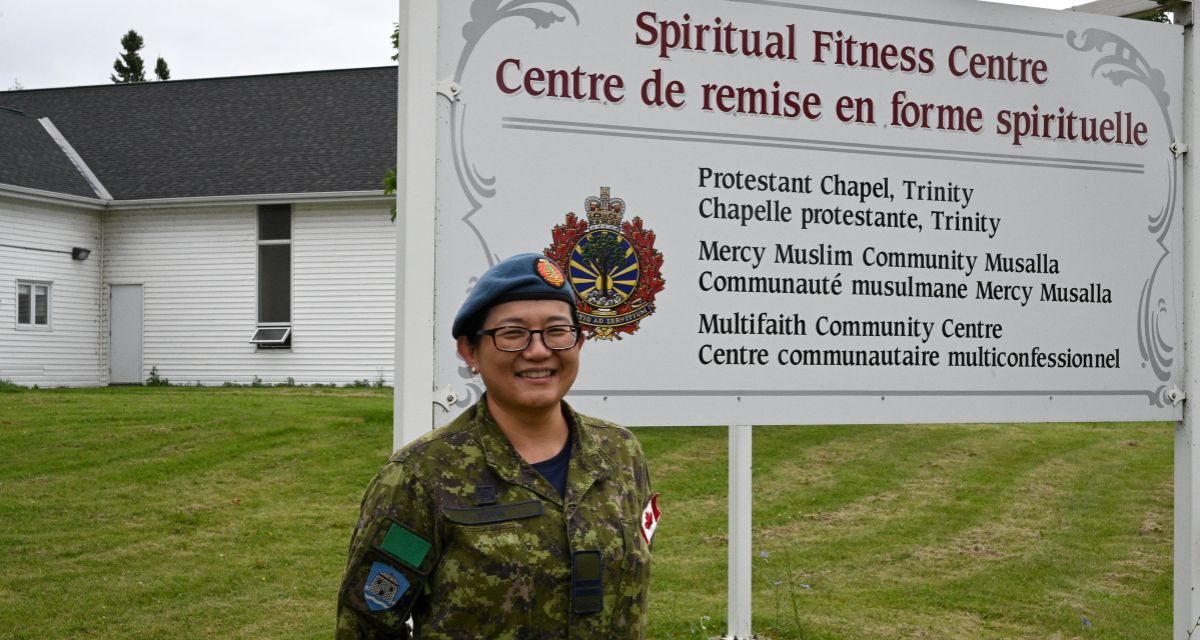
Canada’s military issued a new instruction on July 29, barring chaplains from mentioning God during mandatory public events and requiring a religion-neutral “spiritual reflection” instead.
The policy has drawn sustained pushback from Catholic and evangelical leaders, conservative politicians, and retired chaplains. The government and a leading humanist group have defended it as a matter of state neutrality.
The 2026 instruction expands a 2023 directive that applied only to chaplains to cover all Canadian Armed Forces members, as well as Department of National Defense employees, contractors, students, and volunteers who provide spiritual or religious services. Signed on Oct. 11, 2023, by then-Chaplain General Guy Bélisle and published by National Defence, the earlier directive required chaplains to deliver inclusive spiritual reflections at mandatory public events.
It also replaced chaplains’ faith-tradition scarves with a scarf bearing a common Royal Canadian Chaplain Service crest and warned that noncompliance could result in remedial measures, withdrawal of the Chaplain General’s mandate, or disciplinary action.
Bishop Scott McCaig of the Roman Catholic Military Ordinariate of Canada said Catholic chaplains reported frustration and a sense of betrayal over the directive. He warned that it could reduce them to interchangeable generic counselors.
Facing that backlash, Bélisle granted chaplains temporary leeway to use religious language at that year’s Remembrance Day ceremony while referring the directive to a review committee. Retired chaplain Father Timothy Nelligan urged the Royal Canadian Legion, which organizes the national Remembrance Day ceremony independently of the Canadian Armed Forces, to have its own chaplain lead the prayers instead.
In 2024, McCaig called the policy’s stated aim of preventing religious coercion good and praiseworthy. However, he said that barring chaplains from invoking God could suggest that the government prefers non-religion over religion. He proposed rotating chaplains from different traditions at events instead.
At its 2025 national convention, the Catholic Women’s League of Canada passed a resolution calling on Ottawa to scrap the directive.
Bishop McCaig is working with the Interfaith Committee on Canadian Military Chaplaincy on a joint response to the 2026 instruction. McCaig issued his own statement opposing the policy on August 18 of this year.
In a September interview with Vatican News, McCaig framed the dispute as extending beyond chaplains to the broader question of what secularity means in a modern liberal democracy. He called it “sort of the Canadian version of that struggle.”
McCaig said the Interfaith Committee intends to take its time and act as a good partner with the government while seeking an approach that protects military personnel’s freedom of conscience. The Canadian Conference of Catholic Bishops said it stands in solidarity with McCaig and is studying the policy’s implementation.
Bruce Clemenger, senior ambassador and president emeritus of the Evangelical Fellowship of Canada and a member of the Interfaith Committee on Canadian Military Chaplaincy, said the 2023 policy had already prohibited formal prayer. However, the new instruction goes further by disallowing even an acknowledgment that some attendees may hold religious beliefs.
He said chaplains previously used preambles recognizing the diversity of religious and spiritual views before offering a non-denominational prayer or reflection. They rotated between prayer and reflection so that no single view was privileged. Clemenger said the Supreme Court had ruled against this approach.
In an official statement issued July 31, the EFC argued that “the exclusion rests on the myth of neutrality.” It said the policy privileges one belief system over others despite claiming nonpreferential treatment and called for it to be rescinded and replaced with a more inclusive approach.
The policy applies even to Remembrance Day ceremonies, which are typically hosted by the Royal Canadian Legion rather than directly by the government.
Sharlene Henderson, chair of the Association of Alliance Chaplains, part of the Christian and Missionary Alliance, said she understood the goal of inclusivity. However, she questioned whether excluding references to God was the best way to achieve it. She argued that neutrality should make room for diversity rather than privilege one worldview, religious or secular, over others.
The conservative advocacy group CitizenGO Canada called on Lt.-Gen. Erick Simoneau, commanding officer of the Canadian Armed Forces’ Military Personnel Command, to withdraw the instruction and allow voluntary denominational prayer at official ceremonies.
The Liberal Party, led by Prime Minister Mark Carney, holds a sizable majority in Canada’s Parliament. Conservative defence critic James Bezan wrote on X that the new instruction was “a disturbing departure from Canada’s longstanding commitment to religious expression.”
He accused the government of using the Armed Forces as a testing ground for progressive social experimentation and called the policy unnecessary and regressive. He said the directive excludes military members of faith, interferes with longstanding traditions, and infringes Charter-protected freedoms of religion and expression.
Department of National Defence spokesman Derek Abma said the instruction seeks to be inclusive, not to reject religion. He said ceremonial moments should bring people together regardless of belief and that avoiding language specific to one worldview allows chaplains to respect everyone present.
The department said the Royal Canadian Chaplain Service continues to offer prayer and support for religious expression when participation is voluntary.
The instruction does not address an apparent conflict with existing military regulations stating that the Chaplain General is responsible for leading public prayers at national events or other events deemed appropriate.
Terry Cherwick, who served as a Canadian military chaplain for more than 30 years, said the purpose of inviting a chaplain to pray at a parade speaks for itself. He noted that he was hired to serve as a Catholic priest.
Humanist Canada and the BC Humanist Association welcomed the change. The instruction frames the restrictions as a benefit to chaplains, stating that the policy “privileges them” to fulfill their broader mission of serving a diverse military community.
Humanism is among the belief systems represented by chaplains in the Canadian military. It seems a stretch to call it a religion because it requires no belief in God. It is not surprising that a group that does not believe in God would argue that chaplains could better fulfill their duties by not talking about God.
Retired U.S. Army chaplain Maj. Gen. Douglas Carver, who now leads chaplaincy for the North American Mission Board, questioned the premise that a chaplain’s prayer at a ceremony constitutes a “religious service” requiring neutralization. He noted that no U.S. regulation bars chaplains from praying or requires them to give generic prayers. Canada’s restrictions contrast with the approach of Secretary of War Pete Hegseth, who has moved to expand chaplains’ religious latitude rather than restrict it.
Carver, a former U.S. Army Chief of Chaplains, also cited the Military Chaplains Modernization Act, a bipartisan bill before Congress that would guarantee that chaplains “may conduct worship, provide counseling, teach, deliver sermons, minister and offer prayer in accordance with their sincerely held religious beliefs…free from censorship, undue restriction or fear of retribution.” Violations would be subject to prosecution under the Uniform Code of Military Justice.


No comments